
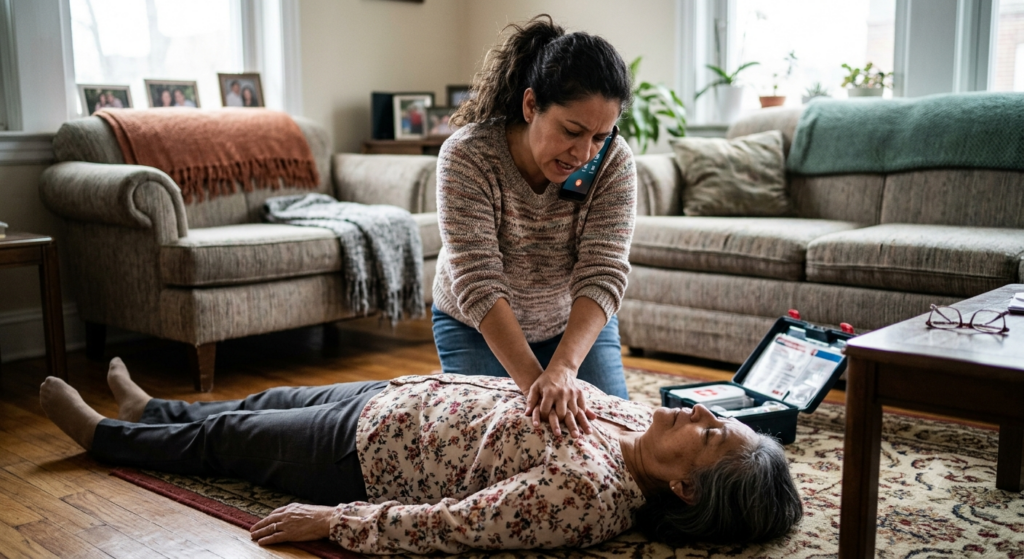
During National CPR and AED Awareness Week, Vitra Health wants everyone to know this:
You do not need to be a doctor to help save a life.
When someone’s heart stops, every minute matters. Calling 911, checking the person, and starting CPR can help while you wait for help to arrive.
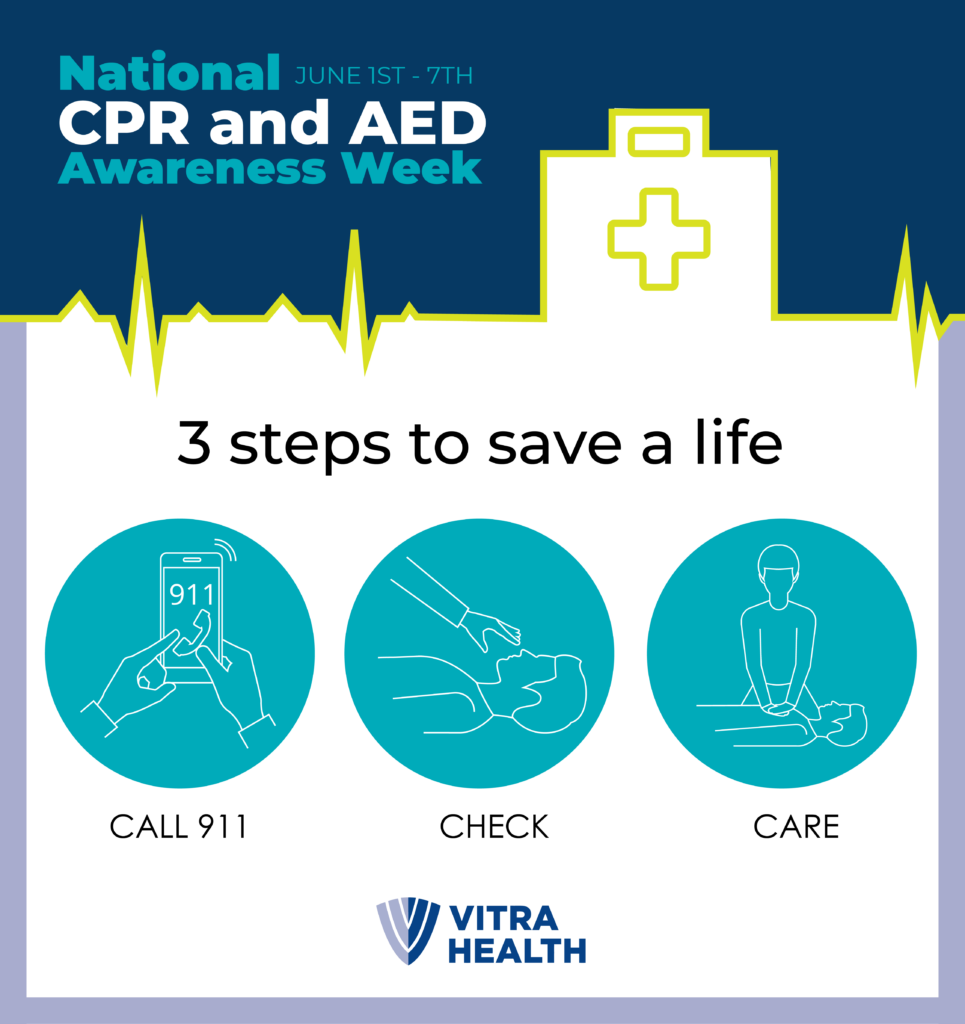
What to do in an emergency
- Call 911
Call 911 right away.
- Tell the person on the phone:
- “I think someone needs CPR.”
- Stay on the phone. The 911 operator can tell you what to do next.
- Check
- Check if the person is awake.
- Say loudly:
- “Are you okay?”
- Tap their shoulder.
- Look to see if they are breathing.
If they do not wake up, or they are not breathing normally, they need help fast.
- Care
- Start Hands-Only CPR.
- Put both hands in the center of the chest.
- Push hard and fast.
- Keep pushing until help arrives.
The American Heart Association says Hands-Only CPR has two steps: call 911 and push hard and fast in the center of the chest.
What is an AED?
An AED is a machine that can help restart a heart.
AED means Automated External Defibrillator.
You may see one in a school, store, airport, church, or community center.
AEDs are made to be easy to use. The machine talks to you and tells you what to do.
Learn More
Take a few minutes to learn Hands-Only CPR from the American Heart Association:
American Heart Association Hands-Only CPR:
Learn the Hands-Only CPR Method
You can also find CPR classes near you through the Red Cross. The Red Cross offers CPR classes in Boston with in-person and blended learning options.
Red Cross CPR classes in Massachusetts:
Share this with someone you love
A few simple steps can make a big difference.
Call 911. Check. Care.
You could help save a loved one, a neighbor, or someone in your community.